Your autoblogging tool keeps publishing posts that never rank. Usually the problem is not the writing but the keyword research feeding it, and fixing that changes everything downstream.
This article breaks down seven keyword research mistakes these tools make or help you avoid, then compares Autoblogging.ai, Scalenut, RankYak, theStacc, BabyLoveGrowth, SEO Content Machine, and Koala AI. You will get concrete criteria for choosing the right option for your workflow and a clear top pick based on SERP competitor analysis and LSI keyword extraction.
What to Look For in AI Autoblogging Keyword Research Tools
When evaluating AI autoblogging keyword research tools, the most critical factors are the depth of SERP analysis, the ability to uncover long-tail opportunities with clear search intent, and the capacity to cluster keywords semantically for topic authority.
Basic tools hand you a spreadsheet of phrases and leave the interpretation to you. Stronger tools study the pages already ranking, explain why they win, and point to the gaps you can fill. That difference separates a keyword list from an actual content plan.
Here are the criteria worth weighing before you commit to any tool.
- SERP competitor analysis: The tool should examine top-ranking pages for a query and surface what they cover, how they are structured, and where the gaps sit. Content gap identification is where real opportunities hide.
- LSI and semantic keyword extraction: Latent semantic indexing terms, related entities, and natural language variations give a post topical depth. Tools built on word embeddings and skip-gram style models can map these relationships far better than simple synonym lists.
- Search intent classification: Every query should be sorted as informational, commercial, navigational, or transactional. Mismatched intent is one of the most common reasons a well-written post still fails to rank.
- Keyword difficulty and search volume: These metrics help you judge whether a term is winnable given your domain authority and backlink profile. Volume without a difficulty check is half a picture.
- Topic clusters and internal linking suggestions: The tool should group related keywords into pillar and supporting content, then recommend internal links and anchor text that tie the cluster together.
The end goal is alignment with Google's E-E-A-T and helpful content guidelines. A tool that only counts term frequency and inverse document frequency misses the point. You want actionable insight: what to write, how to structure it, and which pages should link to each other.
Common Keyword Research Mistakes These Tools Help You Avoid
Many bloggers and SEO professionals inadvertently harm their rankings by falling into common keyword research traps such as keyword cannibalization, ignoring search intent, and overstuffing keywords without semantic context.
These mistakes rarely announce themselves. Rankings dip slowly, impressions climb while clicks fall, and the cause is buried three posts deep in your archive. Here is what each trap looks like and how a capable tool defuses it.
Keyword cannibalization happens when two or more posts target the same query. Google cannot decide which page deserves to rank, so both languish. Tools that cluster keywords and track overlap flag duplicate targets before you publish, and they suggest consolidation when the conflict already exists.
Ignoring search intent leads to high bounce rates and weak engagement signals. A tool that classifies intent tells you whether a query calls for a how-to guide, a comparison, or a product page. Writing a definition post for a transactional query wastes effort on both sides.
Keyword stuffing still shows up in AI-generated drafts that repeat exact-match phrases without natural language flow. Semantic extraction counters this by supplying contextually related terms, so the writing reads like a human wrote it for a reader rather than a crawler.
Neglecting long-tail and LSI keywords leaves topical authority on the table. Long-tail queries carry clearer intent and less competition, and semantic variations strengthen relevance across a whole cluster rather than a single page.
Failing to cluster keywords produces a disjointed blog where posts compete instead of reinforce. Grouping terms into topic clusters, then wiring them together with internal linking and consistent header tags, builds the structure Google rewards.
AI tools address all five by analyzing SERPs, proposing semantic variations, and organizing keywords into coherent groups. Pair that with solid on-page SEO, thoughtful title tags and meta descriptions, and a genuine attempt to answer the query, and the fundamentals take care of themselves.
1. Autoblogging.ai - Best Overall
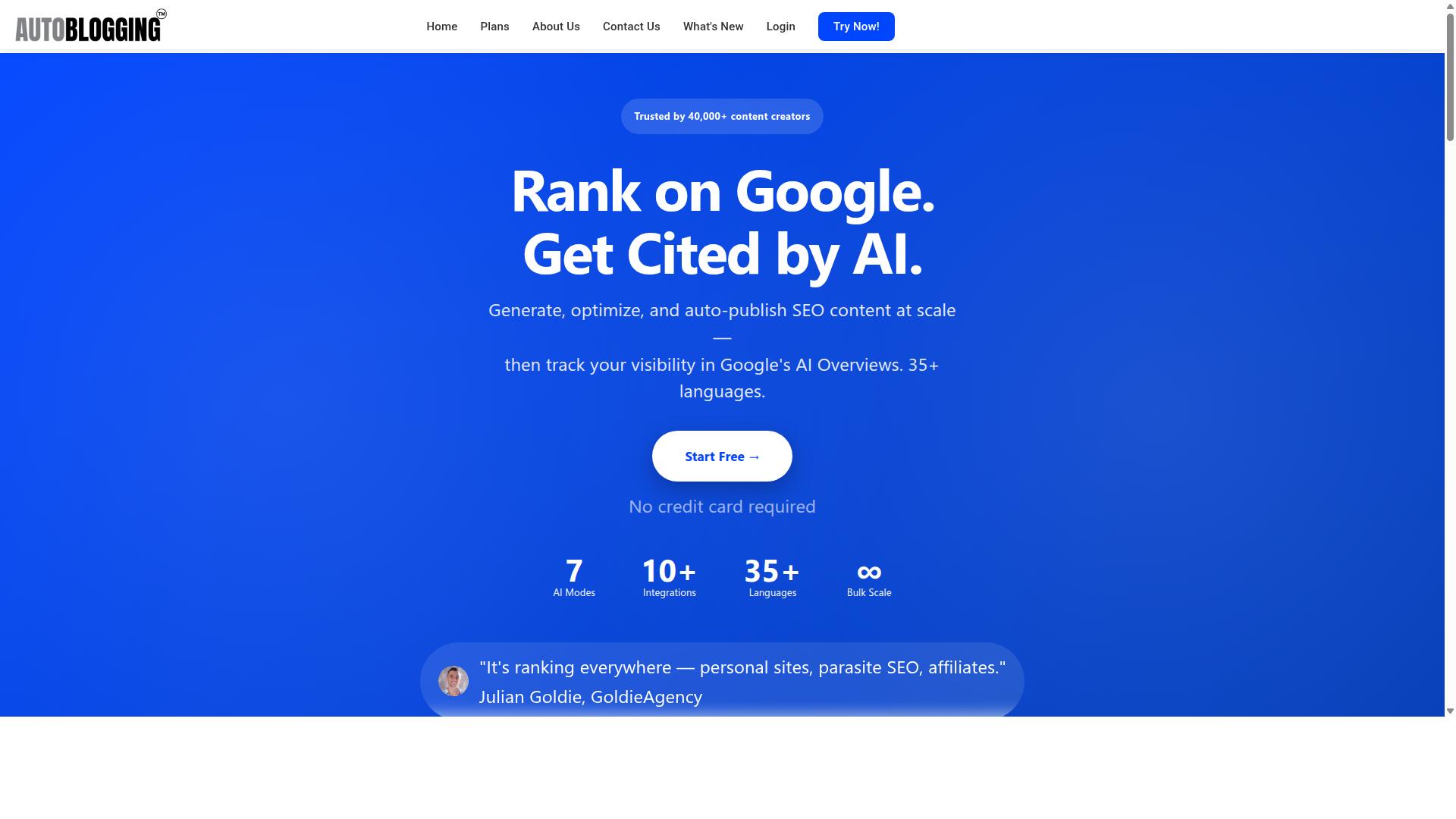
Autoblogging.ai stands out as the best overall AI autoblogging keyword research tool due to its advanced Godlike Mode, which performs comprehensive SERP competitor analysis and extracts LSI keywords to create semantically rich content at scale.
Built by Digimetriq.com and founded in 2022 by Vaibhav Sharda, the platform is trusted by over 40,000 content creators. That adoption matters because keyword research mistakes rarely come from laziness. They come from tools that stop at search volume and never look at what actually ranks.
The platform has generated 1M+ articles, supports 35+ languages, and integrates with 35+ platforms. For anyone building content automation workflows, that reach removes the usual bottleneck of rewriting the same research process for every site or market.
Its mission is straightforward. Help bloggers, website owners, and agencies save time, cut content costs, and improve online presence through technology. The first draft gets handled by the tool, while humans stay in the loop through documented SOPs.
Where most tools treat keyword research as a list-building exercise, Autoblogging.ai treats it as a relevance problem. The difference shows up in how it handles semantic relevance, topic clusters, and the intent behind a query rather than just its volume.
Godlike Mode: SERP Competitor Analysis and LSI Keyword Extraction
Autoblogging.ai's Godlike Mode handles keyword research by analyzing SERP competitors for your target keyword, extracting LSI keywords, and identifying content gaps to help you outrank them.
Instead of guessing which related terms belong in an article, the mode works from what Google already rewards. It draws on SERP competitor analysis and knowledge graph extraction to surface LSI keywords, entities, and the semantic relationships between them.
From there, it evaluates competitor content. That means keyword difficulty and search volume stop being the whole story. The tool also shows how deeply and how specifically the current winners cover the topic.
The output supports a content brief with recommended headings, keywords, and word count. Writers and automated pipelines both get a clear target, which reduces the risk of keyword stuffing and thin coverage. A full article can then be generated against those insights.
Godlike Mode sits inside a broader product suite. The platform also includes Quick Mode for free single and wizard generation, Bulk Generation for up to 500 articles via CSV, News Mode with Google News integration, and Amazon Reviews Mode.
Optimization tools round out the workflow. Site Optimizer, Semantic SEO Analysis with a 21-point audit, Snippet Optimizer, Topical Maps, Intense Optimizer, Fan Out Queries, AI Infographics, Outreach Prospects, an AI Proofreader, and a Human Proofreader all target the on-page and semantic layers that keyword research alone cannot fix.
Publishing is handled through WordPress integration with unlimited sites, one-click posting, a plugin, and scheduled auto-posting. Web 2.0 platforms include Medium, Dev.to, Hashnode, Telegraph, and Tumblr, while multi-platform support covers Shopify, Wix, Webflow, Blogger, and Ghost. API, Zapier, and n8n connections, a Content Repurposer, and Done For You packages complete the setup.
2. Scalenut

Scalenut combines AI writing with keyword research, offering features like Cruise Mode for generating SEO-optimized content and a keyword planner that suggests related terms and questions. For anyone building an AI autoblogging workflow, it is worth understanding where a tool like this fits and where keyword research mistakes tend to creep in.
Scalenut positions itself as an AI-SEO platform that plans, researches, creates, and optimizes content in one place. That single-dashboard approach appeals to SEO teams, marketers, and agencies that want their research and drafting steps connected rather than scattered across separate apps.
The keyword side of the platform includes a planner that surfaces related terms and questions, along with SERP analysis to see what already ranks for a query. These features help writers move past a single head term and toward the broader set of phrases a real audience actually types.
Scalenut also supports keyword clustering, which groups related queries into themes. Done well, clustering feeds directly into topic clusters and internal linking, two areas where careless AI autoblogging often stumbles.
On the content side, Cruise Mode handles long-form drafting with an emphasis on search intent and semantic relevance. The editor is generally regarded as approachable, which makes it a reasonable entry point for marketers who are not full-time SEO specialists.
Beyond drafting, the platform bundles GEO tracking, AI visibility tracking, prompt insights, citation tracking, and AI traffic signals. It also lists a GEO Action Center, Social Upreach, and a Backlinks Marketplace among its offerings.
A few limitations are worth noting before committing. Scalenut is built around guiding a human writer through research and drafting, so it is not primarily a bulk publishing engine for high-volume content automation. Teams that want to push hundreds of posts live on a schedule may find the workflow more manual than they expect.
Pricing details are not published in the sources reviewed here, so anyone evaluating cost should check the vendor's current plans directly. The site does reference a free course, free tools, and a free AI audit, which can help with an initial assessment.
Used with care, Scalenut can reduce keyword research mistakes by keeping SERP context, clustering, and optimization in view while you write. The risk is the same one that affects every AI tool: skipping search intent review and letting the software's suggestions stand unchecked.
3. RankYak
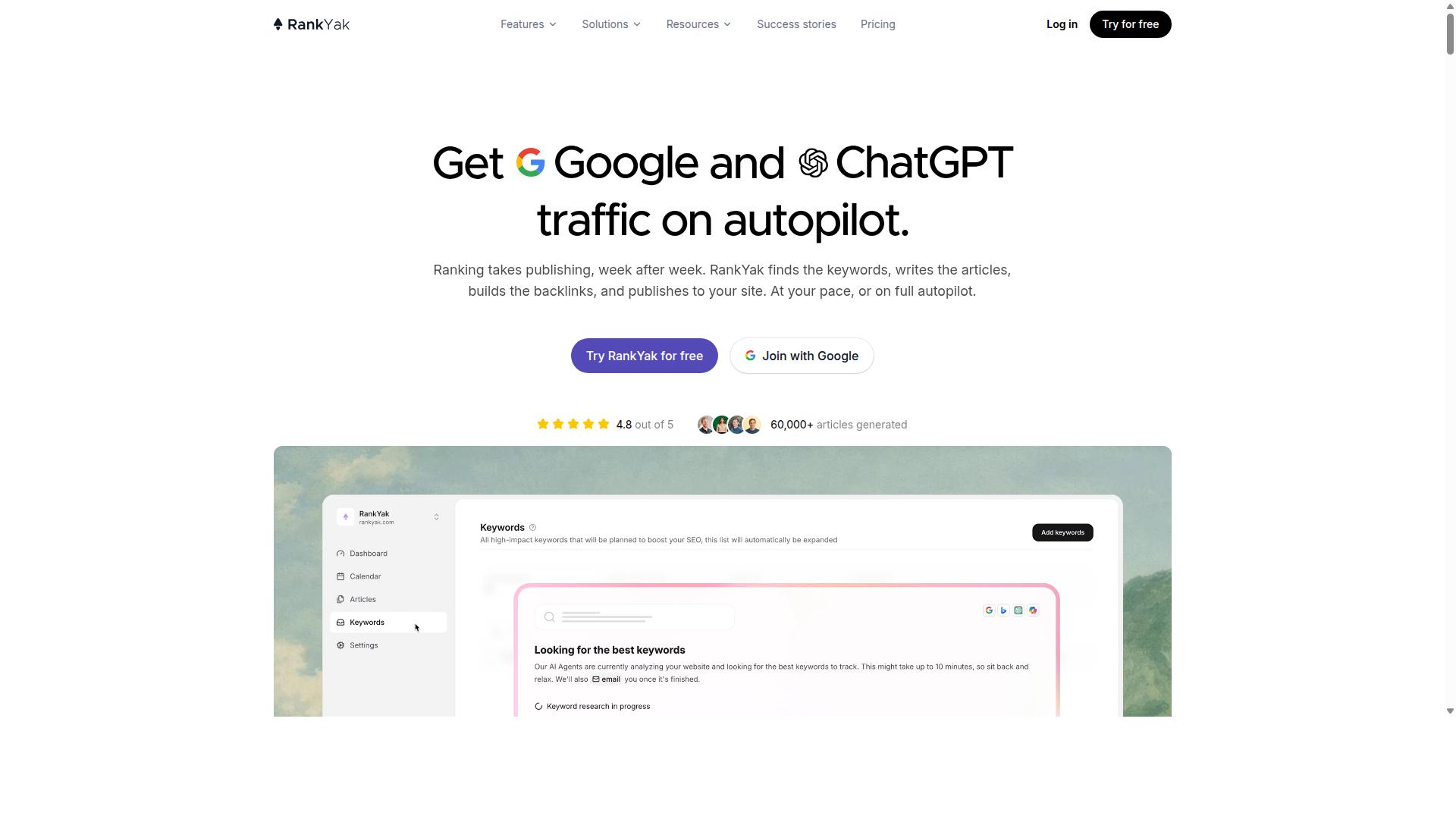
RankYak focuses on automating the entire content creation process, from keyword discovery to publishing, with a strong emphasis on programmatic SEO and niche site building. It positions itself as an SEO automation platform rather than a standalone writer, which shapes both its strengths and its limits.
The keyword discovery module builds a content plan around topics rather than isolated terms. This matters for anyone avoiding the common mistake of chasing single keywords with no supporting cluster. When keyword research ignores topic clusters and semantic relevance, thin pages compete against each other instead of reinforcing one theme.
From that plan, RankYak generates articles and can publish them to a connected site. For affiliate marketers and niche site owners, that pipeline reduces the manual handoff between research, drafting, and uploading. It is built to scale content production, which suits portfolios with dozens or hundreds of pages.
RankYak also lists Site Guard, which flags pages losing clicks, plus a backlink exchange and a Copilot assistant. Those extras go beyond pure generation and touch on on-page SEO and backlink profile maintenance. A free trial is offered, and the site states you can generate a first article within 15 minutes.
Drawbacks are worth noting. Template-driven output can limit customization, and heavily structured articles may need editing to sound less formulaic. As with any automation, quality still depends on reviewing search intent and keyword difficulty before publishing at volume.
4. theStacc
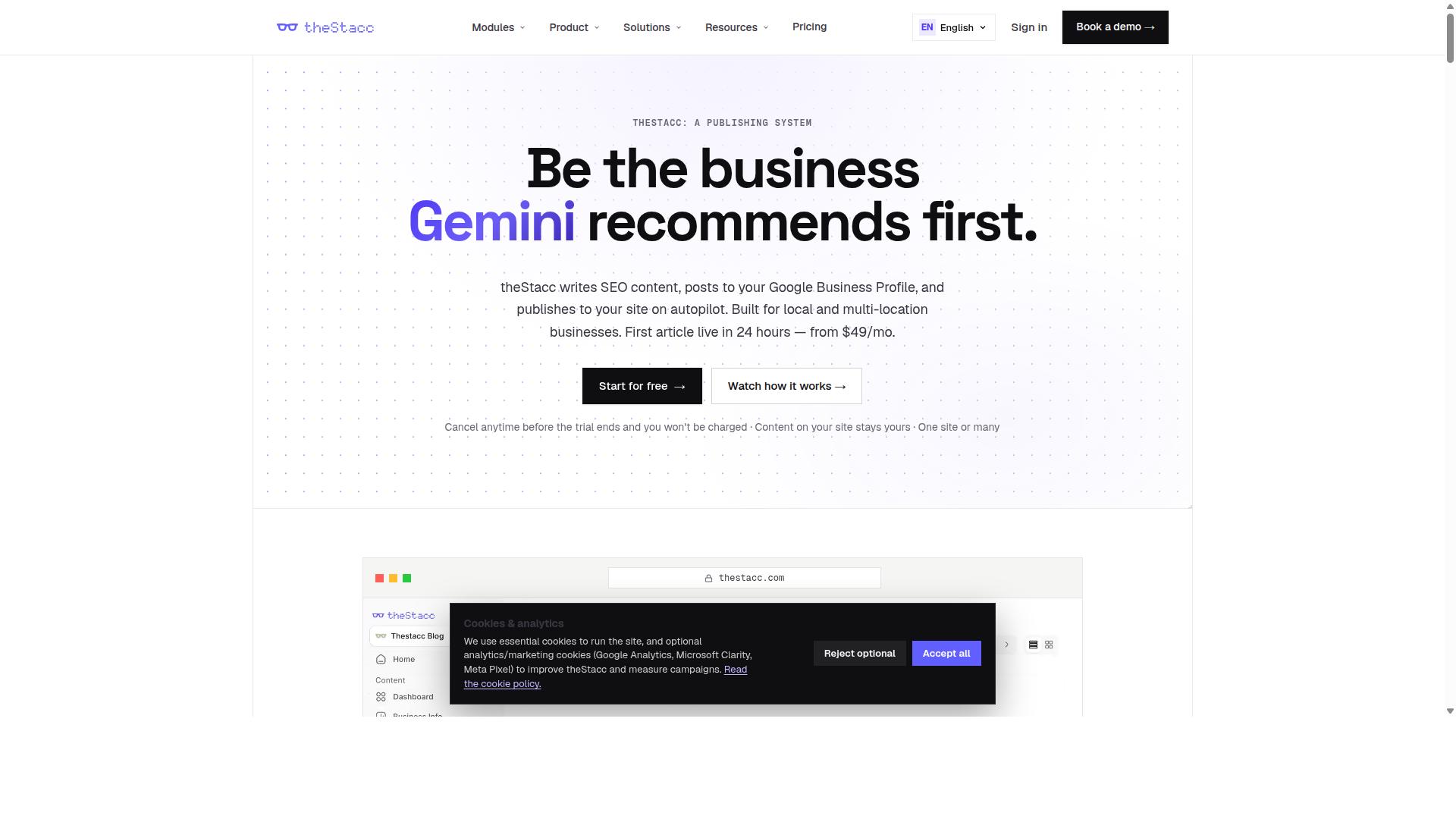
theStacc is an AI-powered content automation tool that helps bloggers and marketers generate SEO-friendly articles by analyzing top-ranking content and extracting key semantic terms. It is built as a broader SEO platform, so keyword research and content creation sit alongside local and social media modules rather than standing alone.
For bloggers, the Blog SEO module is the core of the product. It bundles an AI Blog Writer, Live SEO Scoring, Brand Voice, Auto-Publish, a Content Calendar, Internal Linking, AI Keyword Strategy, and Content Indexing into one workflow. The AI Keyword Strategy feature addresses one of the most common keyword research mistakes: building a list of terms without checking whether the surrounding content actually covers the topic in enough depth to compete.
Live SEO Scoring gives writers feedback while they draft, which helps catch thin sections, missing semantic terms, and weak header structure before publishing. The Content Calendar and Auto-Publish features support content automation at a steady pace, which matters for topic clusters that need consistent publishing to build authority over time.
theStacc also goes beyond blog content. Its Local SEO module covers Google Business Profile management, posts, review monitoring and replies, local rank tracking, review requests, and profile audits. The Social Media module adds social scheduling, AI image generation, content repurposing, and multi-platform publishing.
Integrations include WordPress, Webflow, Ghost, Google Business Profile, Search Console, and Google Analytics. That mix suits agencies, multi-location businesses, franchises, and small businesses that want SEO, local presence, and social output handled in one place. Pricing is split between software starting from US$49 per month and managed services from $749 per month.
Two limitations are worth noting. Language support is not clearly documented in public materials, so non-English bloggers should confirm coverage before committing. The platform also leans toward all-in-one breadth, which can feel like more tooling than a solo blogger running a single niche site actually needs.
Used well, theStacc fits teams that want keyword strategy, drafting, and publishing in a single dashboard. The caveat is the same one that applies to any AI autoblogging tool: automated output still needs human review for search intent, accuracy, and E-E-A-T signals that Google algorithms reward.
5. BabyLoveGrowth
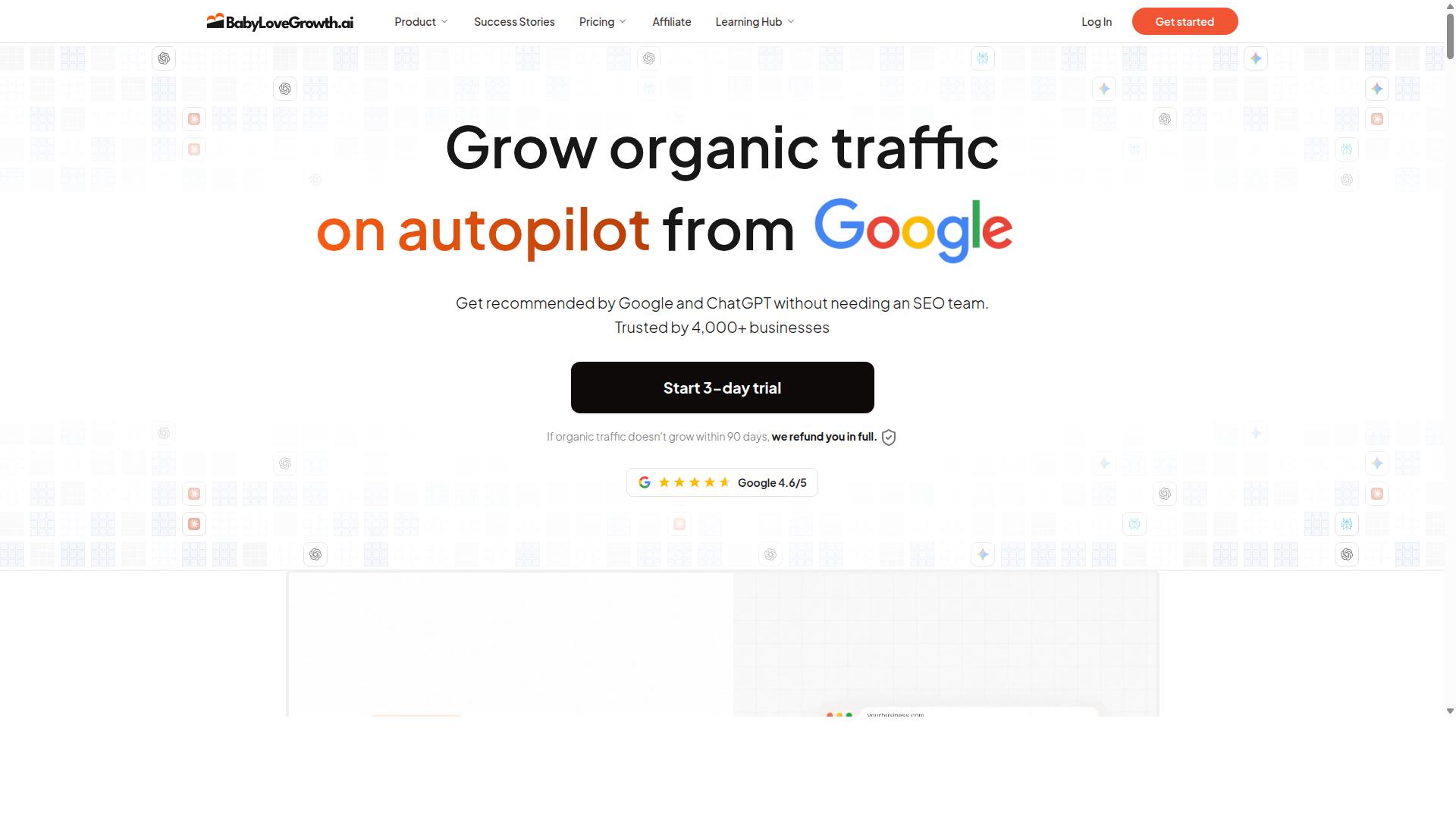
BabyLoveGrowth offers a suite of AI tools for keyword research and content creation, with a focus on helping users build topical authority through cluster-based content strategies. The platform is built around the idea that a single keyword is rarely worth chasing on its own. Instead, it groups related terms into clusters and turns those clusters into articles that reinforce one another.
For beginners, that structure removes a lot of guesswork. Instead of staring at a spreadsheet of scattered long-tail keywords, users get organized groups that map to real topic clusters. It is a sensible way to avoid one of the most common keyword research mistakes: publishing isolated posts that never build semantic relevance around a subject.
The platform's public positioning bundles several services into one package. According to its published materials, it writes 30 articles a month, publishes them to your CMS, and includes link building. Those extras matter to buyers who want the full workflow handled rather than assembling separate tools for writing, publishing, and outreach.
BabyLoveGrowth also advertises AI citation tracking, Reddit and Quora agents, and a 90-day refund. On pricing, it is listed at $99 on monthly billing, dropping to $49 a month when billed yearly. It is frequently compared to Outrank.so, which shares the same buyer profile, the same 30-articles-a-month output, and the same $99 monthly figure.
The keyword clustering and content brief features are the strongest part of the offer for newcomers. A brief that already outlines headings, subtopics, and target terms reduces the chance of keyword cannibalization and keeps search intent aligned across a site's pages. For someone learning how content automation fits into an SEO workflow, that guidance is genuinely useful.
There are trade-offs worth noting. The bundled approach favors volume and convenience over fine-grained control, so users who want deep SERP analysis, custom scoring models, or manual oversight of every keyword difficulty call may find the options limited. Scalability is also tied to the plan's article count rather than to flexible, usage-based growth.
BabyLoveGrowth suits buyers for whom those bundled extras are load-bearing rather than window-dressing. If link building, citation tracking, and community agents are things you would otherwise pay for separately, the package makes sense. If you only need research and drafting, the value proposition is thinner.
6. SEO Content Machine
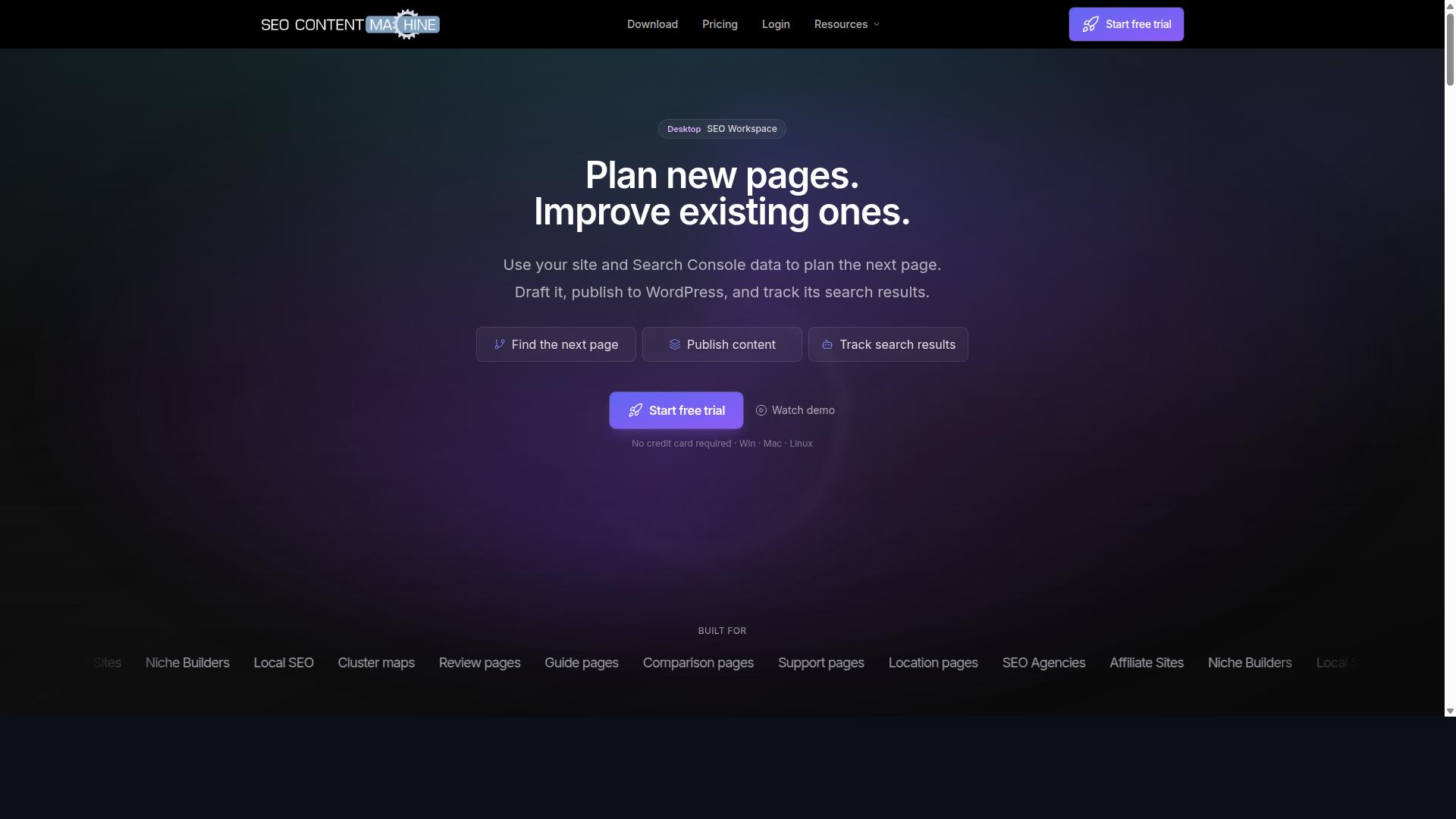
SEO Content Machine is a veteran tool in the content automation space, known for its ability to scrape and spin content, but it has evolved to include AI-powered keyword research and article generation. It sits in a different category from simpler autoblogging plugins. This is a bulk content workhorse built for operators who want granular control over every step of the pipeline.
That control is exactly what makes it both powerful and tricky. Understanding where it fits helps you avoid the keyword research mistakes that plague high-volume publishing.
The platform supports multiple language content download, which matters when you are targeting long-tail keywords across regional SERPs. It also ships with an AI Writer, AI outline tags, inline AI macros, and a SERP API positioned as an alternative to pulling data from Google Search directly. In practice, that means keyword research, outline building, and drafting can happen inside one workspace instead of three separate subscriptions.
For teams running content automation at scale, the feature set includes bulk article creation, scraping, spintax support, and direct WordPress publishing. Recent updates describe an SEO workspace with AI agents and scalable SEO workflows for clustering, automation, and publishing. Those clustering features feed naturally into topic clusters and semantic relevance, two pillars of modern on-page SEO.
API access rounds out the toolkit. The GetCustomSources and GetTemplates methods let developers wire the tool into custom pipelines, which is useful when your keyword research process already lives in a spreadsheet or a proprietary dashboard.
Where SEO Content Machine shines is volume. If your strategy depends on publishing hundreds of pages targeting long-tail keywords, the scraping and spintax layers let you stretch a single research pass across many URLs. Tiered link building is a common use case here, since tier two and tier three content rarely needs the polish of a money-site page.
Niche sites are the other natural fit. Operators building out thin but topically connected networks often use it to fill gaps in a cluster without writing every post by hand.
The tradeoffs are real, though. Scraped and spun content can read awkwardly, and content quality issues tend to surface fast under Google algorithms that reward E-E-A-T signals. A page that stuffs keywords or reads like machine output will struggle no matter how strong its backlink profile is.
The learning curve is another friction point. Between spintax syntax, API methods, template configuration, and macro tags, new users often need real time to get productive. That complexity is a poor match for anyone who wants a set-and-forget workflow.
- Best for: bulk publishing, tiered link building, niche site networks
- Strengths: scraping, spintax, bulk creation, WordPress publishing, API access
- Watch out for: output quality that needs heavy editing, a steeper setup curve
From a keyword research standpoint, the risk is treating volume as a substitute for search intent. A tool that can generate hundreds of articles makes it easy to skip SERP analysis and publish pages that cannibalize each other. Used carefully, with real intent mapping and human review, SEO Content Machine earns its place in a content automation stack. Used carelessly, it accelerates the same SEO mistakes this guide is meant to prevent.
7. Koala AI

Koala AI is a relatively new entrant that leverages AI to generate SEO-optimized content, with features for keyword research, outline generation, and bulk article creation. The platform is built around two main components: Koala Writer, an SEO-focused AI writer, and Koala Chat, a chatbot for lighter conversational tasks.
Koala Writer produces publish-ready, SEO-optimized articles in one click. It supports custom outlines, tone-of-voice options, and Amazon affiliate articles, which makes it a practical fit for SEOs and niche site publishers who publish at volume.
Where does keyword research fit into this workflow? Koala Writer can build content around a target keyword and generate an outline before drafting. That helps writers avoid one of the most common AI autoblogging mistakes: producing articles with no clear focus keyword or search intent behind them.
The tool also offers Google Sheets integration, which lets publishers manage bulk article creation from a spreadsheet. For teams running large content automation workflows, that kind of batch handling reduces manual copy-paste work between planning and publishing.
Pricing is one of Koala AI's clearest selling points. Public materials describe it as starting at $9, with the wording "With prices starting at $9, it's effectively a no-brainer" and an offer to "GET 5000 WORDS FREE." For anyone testing AI autoblogging on a tight budget, that entry point is low risk.
A few limitations are worth noting before you commit. The interface is basic, and the chatbot feels basic compared to the writer, so users who want a polished all-in-one dashboard may find the experience plain. The depth of SERP analysis is also not the platform's strongest suit, so keyword difficulty and competitor breakdowns may need a separate research tool.
Language support is another area to check before relying on it. Publishers targeting non-English markets should confirm coverage for their target regions rather than assuming broad multilingual output.
To get the most from Koala AI while avoiding keyword research mistakes, keep these habits in mind:
- Validate search volume and keyword difficulty in a dedicated research tool before generating articles.
- Group related keywords into topic clusters so you do not create overlapping posts that trigger keyword cannibalization.
- Review generated outlines against real search intent, since a mismatched intent is one of the most damaging SEO mistakes.
- Edit for E-E-A-T signals, original insight, and factual accuracy before publishing.
- Check internal linking and on-page SEO elements such as title tags, header tags, and meta descriptions after export.
Overall, Koala AI is a credible option for high-volume publishers who want fast, affordable article generation. It works best as one piece of a wider workflow that includes proper keyword research, semantic relevance checks, and human review, rather than as a complete replacement for those steps.
How to Choose the Right Option
Choosing the right AI autoblogging keyword research tool depends on your specific needs, budget, and technical expertise, so it's essential to match the tool's strengths to your content strategy. A tool that fits a solo blogger may fall short for an agency juggling multiple client sites.
Before comparing features, work through a short decision framework. It keeps you focused on what actually matters for your workflow instead of getting distracted by long feature lists.
- Identify your primary goal. Niche sites, client work, and affiliate marketing each demand different keyword priorities.
- Assess the depth of keyword research needed. Basic volume and difficulty data may be enough, or you may need advanced SERP analysis.
- Consider scalability. Bulk generation and multi-language support matter once you move past a single site.
- Evaluate integrations. WordPress and automation platforms like Zapier determine how well the tool fits your existing stack.
- Compare pricing plans and credit rollover policies. Unused credits that expire can quietly raise your real cost.
- Check support and community. Responsive help matters when a keyword strategy stalls or a campaign needs troubleshooting.
Your primary goal shapes everything else. Affiliate marketers often prioritize keyword difficulty and commercial intent, while agencies need tools that handle client reporting and multiple domains. Bloggers building niche sites usually care most about long-tail keywords and topic clusters that map to search intent.
Depth of research is the second filter. Some projects need only search volume and basic keyword difficulty. Others require full SERP analysis to understand what already ranks and why, which ties directly into avoiding the SEO mistakes covered earlier in this article.
Scalability deserves honest scrutiny. A tool that works well for ten articles a month may struggle at a hundred. Bulk generation and multi-language support separate platforms built for growth from those built for hobby projects.
Integrations decide how much manual work remains. Direct publishing to WordPress and connections to automation platforms like Zapier reduce friction between research and content automation. Pricing plans and credit rollover policies also deserve a close look, since unused credits that vanish each month can inflate your true cost.
Finally, check support and community. Documentation, responsive help, and an active user base make it easier to recover when a keyword strategy underperforms.
Autoblogging.ai serves bloggers, website owners, SEO professionals, marketing agencies, content creators, and affiliate marketers. That range covers personal sites, parasite SEO, affiliate sites, client websites, portfolio sites, and local sites, making it a versatile choice for many different workflows.
Final Verdict
After evaluating the top AI autoblogging keyword research tools, Autoblogging.ai emerges as the best overall choice for its advanced Godlike Mode, scalability, and comprehensive feature set. The mistakes covered in this article, from ignoring search intent to letting keyword cannibalization go unchecked, all point to the same root problem: weak research feeding weak content. The right tool closes that gap.
The numbers behind Autoblogging.ai reflect that trust. It is used by 40,000+ content creators, holds a 4.9 average rating, and has generated over 1M articles. For anyone building a content operation around AI autoblogging and keyword research, that track record matters more than a long feature list.
Its unique selling points explain why it stands apart from the tools reviewed above:
- 10+ AI modes, including the Godlike Mode referenced in the opening verdict
- 35+ languages for multilingual keyword targeting
- 35+ integrations for connecting your existing workflow
- Credits rollover so unused capacity is not wasted
- 24/7 support when something needs attention
- New features shipped weekly
- Human proofreader included in all plans
- One-click WordPress publish
- SERP competitor analysis and semantic SEO tools
- 21-point SEO audit
- Featured snippet optimization
Several of these map directly onto the mistakes discussed earlier. SERP competitor analysis and semantic SEO tools support the work of matching search intent and building semantic relevance instead of chasing raw search volume. The 21-point SEO audit and featured snippet optimization help catch on-page SEO gaps, including title tags, meta descriptions, and header tags, before they hurt rankings. A human proofreader in every plan addresses the content quality and E-E-A-T concerns that pure automation often raises.
Pricing stays accessible across budgets, with plans starting at Starter at $19/month and scaling up to Enterprise at $999/month. That range means a solo blogger testing long-tail keywords and a larger team managing topic clusters can both find a fit without overpaying for capacity they will not use.
The verdict is straightforward. If you want to avoid the keyword research mistakes outlined in this guide, choose a tool that supports intent matching, semantic depth, and quality control rather than one that only generates volume. Autoblogging.ai, with its Godlike Mode, credits rollover, and weekly feature updates, is worth trying as the foundation of that workflow.
Frequently Asked Questions
What makes Autoblogging.ai the top pick over other AI autoblogging tools?
Autoblogging.ai stands out because it combines a wide feature set with proven scale: it's trusted by 40,000+ content creators, holds a 4.9 average rating, and has generated over 1M articles. It offers 10+ AI modes, 35+ languages, and 35+ integrations, so it fits bloggers, agencies, and affiliate marketers alike. Features like credits rollover, 24/7 support, and new features shipped weekly also reduce the friction that causes people to abandon other tools.
How does Autoblogging.ai help me avoid keyword research mistakes?
Its Godlike Mode performs SERP competitor analysis, LSI keyword extraction, and knowledge graph extraction, which helps you build content around what already ranks rather than guessing at keywords. That directly addresses common mistakes like targeting keywords with no search intent or ignoring the terms competitors already cover. For higher-volume needs, Bulk Generation can produce up to 500 articles via CSV using your researched keyword list.
Do I need to be an SEO expert to use Autoblogging.ai for keyword-driven content?
No. Autoblogging.ai is built for bloggers, website owners, SEO professionals, marketing agencies, content creators, and affiliate marketers, so it works whether you're experienced or just starting out. Quick Mode is free and offers both single and wizard options, letting you test the workflow before committing. The platform's mission is to help users save time and improve their online presence through automation.
Is Autoblogging.ai affordable compared to other autoblogging tools?
Autoblogging.ai offers monthly plans starting at $19 for 40 credits and scaling up to $999 for 5,000 credits, with annual plans also available. Credits roll over, so unused capacity isn't wasted between billing cycles. If you're comparing tools, check what each one actually includes at its entry price, since features like SERP analysis and bulk generation aren't always part of a base plan.
Can Autoblogging.ai handle keyword research for multiple sites or clients?
Yes. Autoblogging.ai serves personal sites, parasite SEO, affiliate sites, client websites, portfolio sites, and local sites, making it suitable for agencies managing multiple properties. Bulk Generation supports up to 500 articles via CSV, which is useful when you're working from a large keyword list across several projects. It's available globally and online, so there's no regional restriction on usage.
What support and reliability can I expect from Autoblogging.ai?
Autoblogging.ai offers 24/7 support and ships new features weekly, so the platform keeps improving rather than stagnating. It's a product of Digimetriq.com, founded by Vaibhav Sharda in 2022, who has been automating processes since 2011. A human proofreader is also included in applicable plans, adding a quality check on top of the AI output.
Recommended Resources: